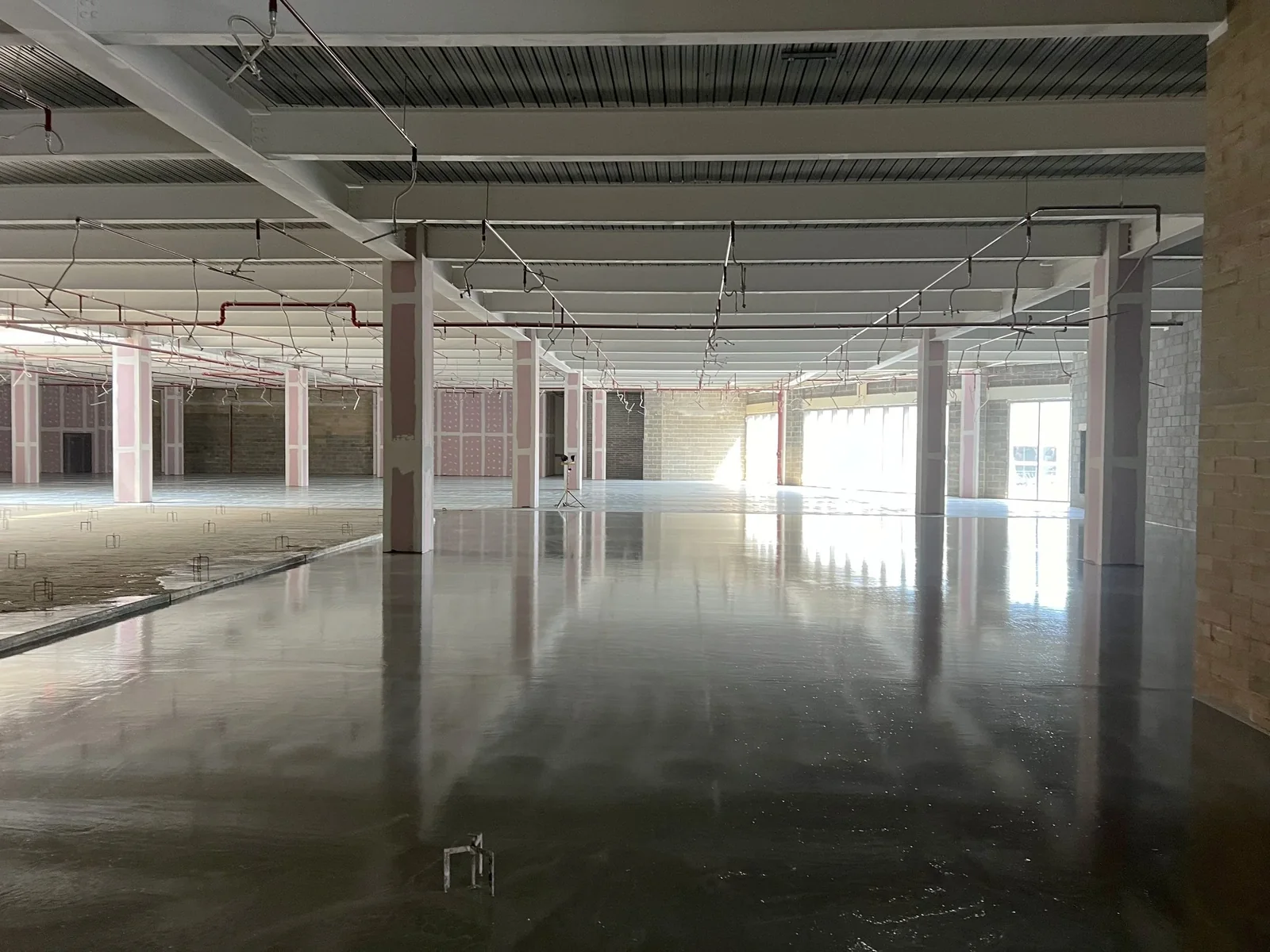
High Wycombe retail & leisure
TeamSport High Wycombe: 2,000m²+ across the whole screeding package. Flowing screed served the retail area; the track used a bonded build-up and topping.
View projectFlowing screed for larger floors and underfloor heating. Send your floor details or drawings for a reviewed quotation.
Based in Buckinghamshire. Serving London and surrounding counties. Availability depends on postcode, site access and programme.
No drawings yet? Send the details you have; we will review what is needed.
TeamSport High Wycombe: 2,000m²+ across the whole screeding package. Flowing screed served the retail area; the track used a bonded build-up and topping.
View projectLiquid screed is a pump-applied, flowing screed used to form a level surface over a prepared floor build-up. It is delivered as a wet mix and placed by hose, which can suit larger open areas and projects where coverage and level tolerance matter.
It is not always the right choice over traditional sand and cement — the suitable system depends on the floor build-up, the drying environment and the follow-on floor finish. Both approaches have their place; the right one is confirmed against the project, not the catalogue.
Liquid screed is not a single product. Two broad families cover most projects, with the right choice depending on the build-up, the environment and the finish that follows.
Often considered for underfloor heating and larger floor areas where a flowing pour and close pipe contact suit the build-up.
Requires correct drying conditions and laitance management before bonded finishes. Suitability depends on the project specification and the final floor finish.
Can be considered where moisture exposure, programme, finish build-up or specification points towards a cement-based system rather than calcium sulphate.
Final selection still depends on substrate, build-up and follow-on trades. Reviewed against the project before quotation.
Gyvlon is a trade name, not a single product. It covers Anhydritec's UK range of calcium sulphate (anhydrite) flowing screeds, and the range spans several system types: general-purpose standard systems, systems aimed at underfloor heating build-ups, higher-strength versions for heavier loading, thinner levelling grades, and faster-drying or early-to-cover variants. When a drawing or specification simply says “Gyvlon”, the useful next question is always which product within that range is intended.
That matters because selection follows the project, not the brand. The build-up, the loading, whether there is underfloor heating, the final floor finish and the programme all point towards different products — and the manufacturer's data for the selected product governs depth, drying and preparation.
Preparation before floor finishes is a good example. Standard Gyvlon products and the advanced E2C variants have different laitance, sanding and floor-covering preparation requirements, so there is no single instruction that covers the whole range. See preparing and priming screed before tiling and screed moisture testing for how those checks are actually carried out.
On depth, current Gyvlon FAQ guidance describes typical standard-system depths of around 25 mm fully bonded, 30 mm unbonded or in mechanical contact, 35 mm floating in domestic use and 40 mm floating in commercial use. Those are current published examples for that named range — they are not British Standard universal minima, and other products differ. The reasoning behind that is set out in the screed depth guide.
For heated floors, current Gyvlon guidance describes standard cover of around 25 mm above the pipework, with product-specific variants that allow different figures. Total depth and cover over the pipe are two separate numbers, and the manufacturer and product data govern both. See screed over underfloor heating.
Screeding.com is not claiming manufacturer approval or affiliation by explaining the product family. We install calcium sulphate flowing screeds where they suit the project, and we work to whatever product and specification the project actually adopts. Background reading is collected in the technical guides library.
Liquid screed often fits projects where coverage, level tolerance and continuous pours are part of the brief. The right system is confirmed against the project, never assumed.
Often considered where pipework needs to be encapsulated across a heated floor build-up.
Apartments, open-plan extensions and high-spec new build with continuous floor areas.
Where pour planning, level tolerance and coverage support the wider programme.
Light-commercial fit-outs and developer schemes with larger, more continuous floors.
Where the follow-on finish benefits from a flowing pour over a prepared build-up.
Suitability is confirmed against the project's build-up, substrate, access, drying environment and follow-on finishes.
Liquid screed can be installed bonded, unbonded or floating depending on the substrate, the build-up and what sits beneath the screed. Thickness is specification-dependent and confirmed against system, loading, insulation and any underfloor heating cover — not picked from a generic minimum.
Soundness, levels, datum and any required preparation before the pour.
Damp-proof membrane or separation layer where the build-up calls for it.
Perimeter edge strip and movement detailing reviewed against the build-up.
Continuity, thickness and edge detailing where insulation sits below the screed.
Fixings, pressure test and cover where UFH is included in the build-up.
Tile, timber, vinyl, resin or carpet — the finish above influences system choice.
A flowing screed is pumped and worked across the floor rather than laid and compacted by hand, which suits larger continuous areas where a level plane across the pour matters.
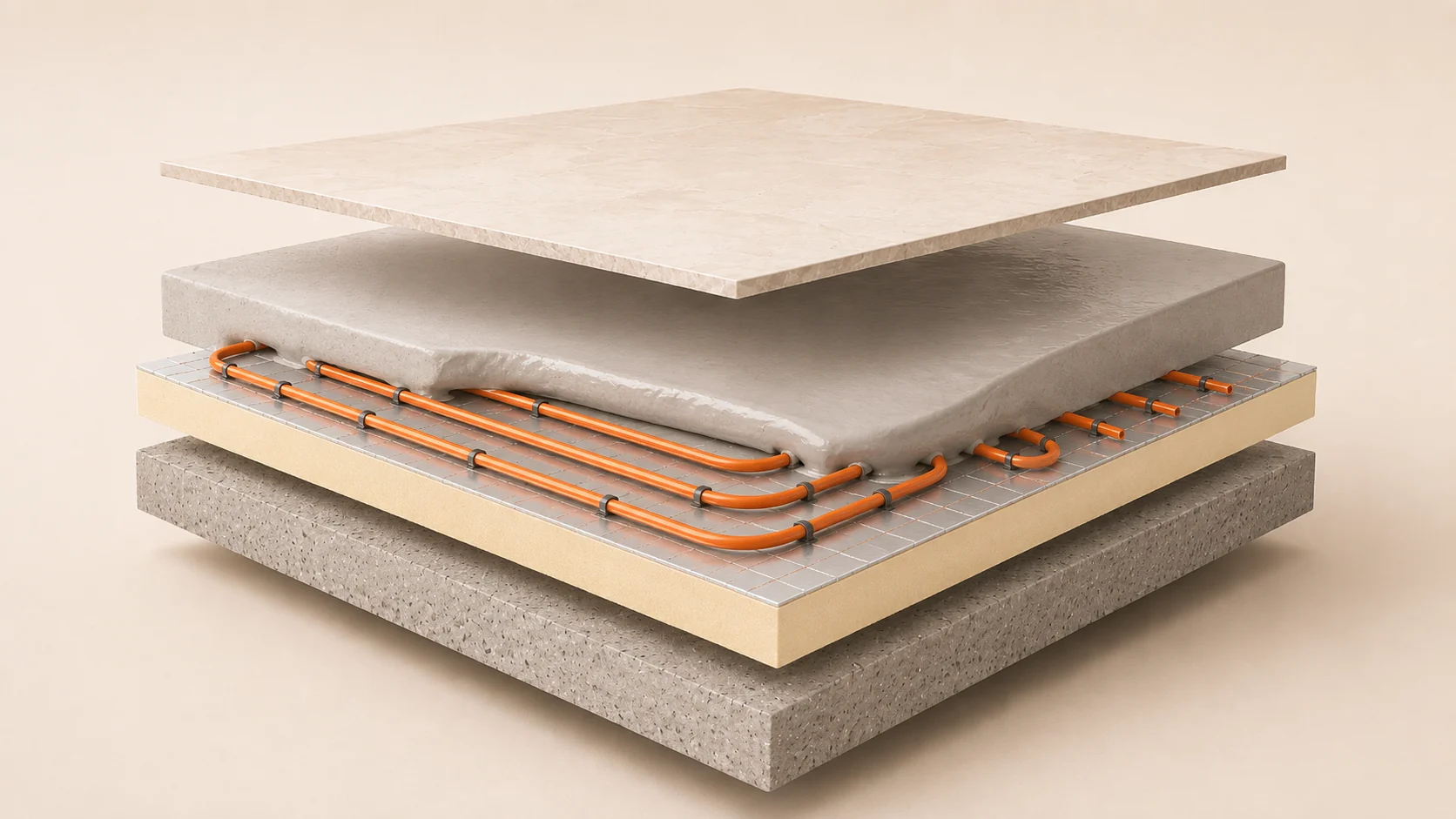
Where underfloor heating sits in the build-up, a flowing screed can work around and over correctly fixed pipework, filling voids so the pipes are surrounded rather than sitting in pockets of air.
Substrate, membranes, insulation continuity, edge strip and the chosen product all set the depth and system. These are confirmed against the specification and manufacturer data before any formal quotation.
Liquid screed is often considered for underfloor heating because it can flow around the pipework and form close contact across the heated floor build-up. The right system still depends on pipe layout, insulation, required depth, programme and the final floor finish.
Where underfloor heating installation is required, it can be coordinated through a specialist partner before the screeding team completes the floor. Commissioning and heat-up sequence follow the relevant system and manufacturer guidance, reviewed against the wider construction programme.
Liquid screed often suits commercial floor areas, developer plots, apartment schemes and light-commercial fit-outs where larger continuous pours and level finish are part of the brief. Programme, access and follow-on trades are reviewed alongside the specification.
Pour sequencing, datum, access and protection planned around the wider site programme.
Pump access, hose runs and delivery routes reviewed before the quotation is issued.
Ventilation, weather protection and site conditions considered against the follow-on trades.
Tiling, flooring, fit-out and services coordinated around the floor's drying and surface readiness.
Preparation, access and programme are reviewed as part of the installation package rather than as a standalone service. Each item below is considered against the project build-up and the wider construction programme.
Soundness, levels, datum and any preparation needed before the pour.
Damp-proof membrane or separation layer continuity where the build-up requires it.
Edge strip and abutments detailed around the pour area.
Pipes, ducts and rises detailed and protected before the pour.
Pump location, hose length and lift considered against the access route.
Vehicle and pump positioning, traffic management and site logistics reviewed before the pour.
Floor protection, traffic control and weather considered ahead of follow-on trades.
Reviewed against the wider construction programme rather than promised in fixed days.
Where bonded finishes require laitance removal, this is detailed before the finish above.
For straightforward traditional sand and cement floors, request an indicative estimate for review. Liquid screed requires a reviewed quotation; send its details or drawings through the commercial quotation route.
Send area, total depth or build-up if known, UFH details, postcode, pump position and route, and programme. Supply drawings for unknown information; no default depth or system is assumed.
Liquid screed is often considered for underfloor heating because it can flow around the pipework and form close contact across the heated floor build-up. Suitability still depends on the floor build-up, pipe layout, required depth, system and the final floor finish, and is confirmed against the specific project before quotation.
Calcium sulphate (anhydrite) liquid screeds are often considered for underfloor heating and larger floor areas and need correct drying conditions and laitance management before bonded finishes. Cement-based flowing screeds can be considered where moisture exposure, programme or specification points away from calcium sulphate. The right system depends on the project conditions and the follow-on finishes.
Thickness depends on the system, loading, substrate, insulation, underfloor heating cover and the wider specification. Generic minimum figures exist in product literature, but the final depth is specified against the project rather than treated as a universal rule.
Drying depends on the system, thickness, ventilation, site conditions and the relevant manufacturer guidance. Practical drying times should be discussed against the specific floor build-up and programme rather than treated as fixed day counts.
Wet areas may require a cement-based system or additional specification review. Calcium sulphate systems need careful consideration around moisture exposure and the final finish. The suitable approach is confirmed against the project build-up and the follow-on finishes.
Where underfloor heating installation is required, it can be coordinated through a specialist partner before the Screeding.com team completes the screed. Not all underfloor heating work is delivered in-house — the screed system, build-up and pour are.
Gyvlon is a trade name for a range of calcium sulphate (anhydrite) flowing screeds rather than one product. Products in the range are commonly considered for underfloor heating build-ups, larger continuous flowing pours and floating or acoustic build-ups, with the specific variant chosen to suit the loading, depth, floor finish and programme. The actual product, build-up, finish and manufacturer data govern depth, drying and preparation. Explaining the range is not a claim of manufacturer approval or affiliation.
Screeding.com is based in Buckinghamshire and serves London and the surrounding counties. Wider regional enquiries are reviewed by postcode, site access and programme, with availability confirmed for each project. See the areas we cover page for selected places.
Review the build-up, access, underfloor heating and floor finish programme for your project.
Send your area, build-up, underfloor heating details, postcode and programme. Drawings help where information is still unknown.