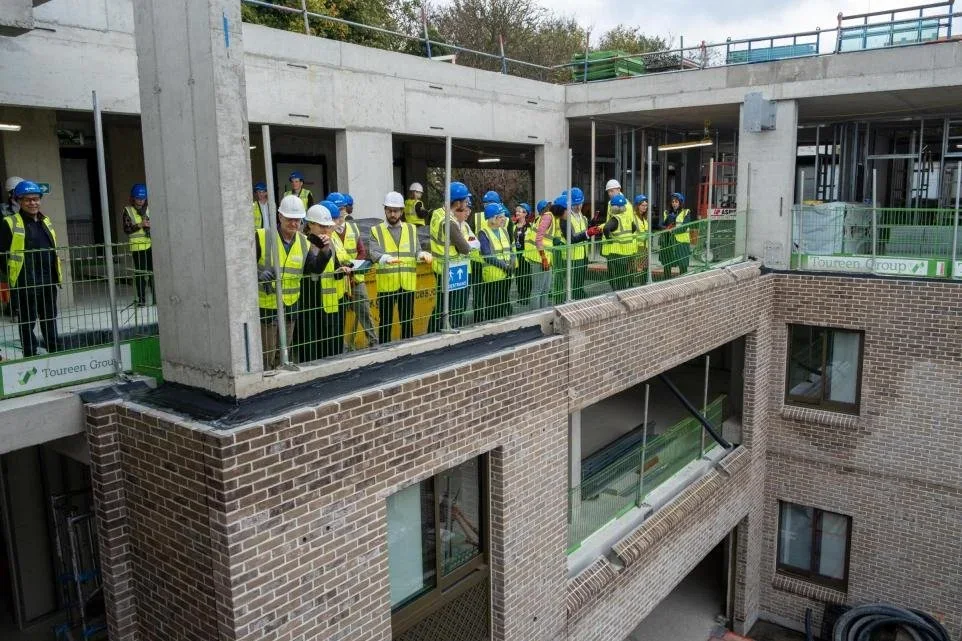
Highgate East
Sand and cement screed with specialist additives, coordinated with underfloor heating at the Highgate East healthcare development.
View projectTraditional bonded, unbonded and floating screed systems for commercial and domestic floors, reviewed against the project build-up.
Based in Buckinghamshire.
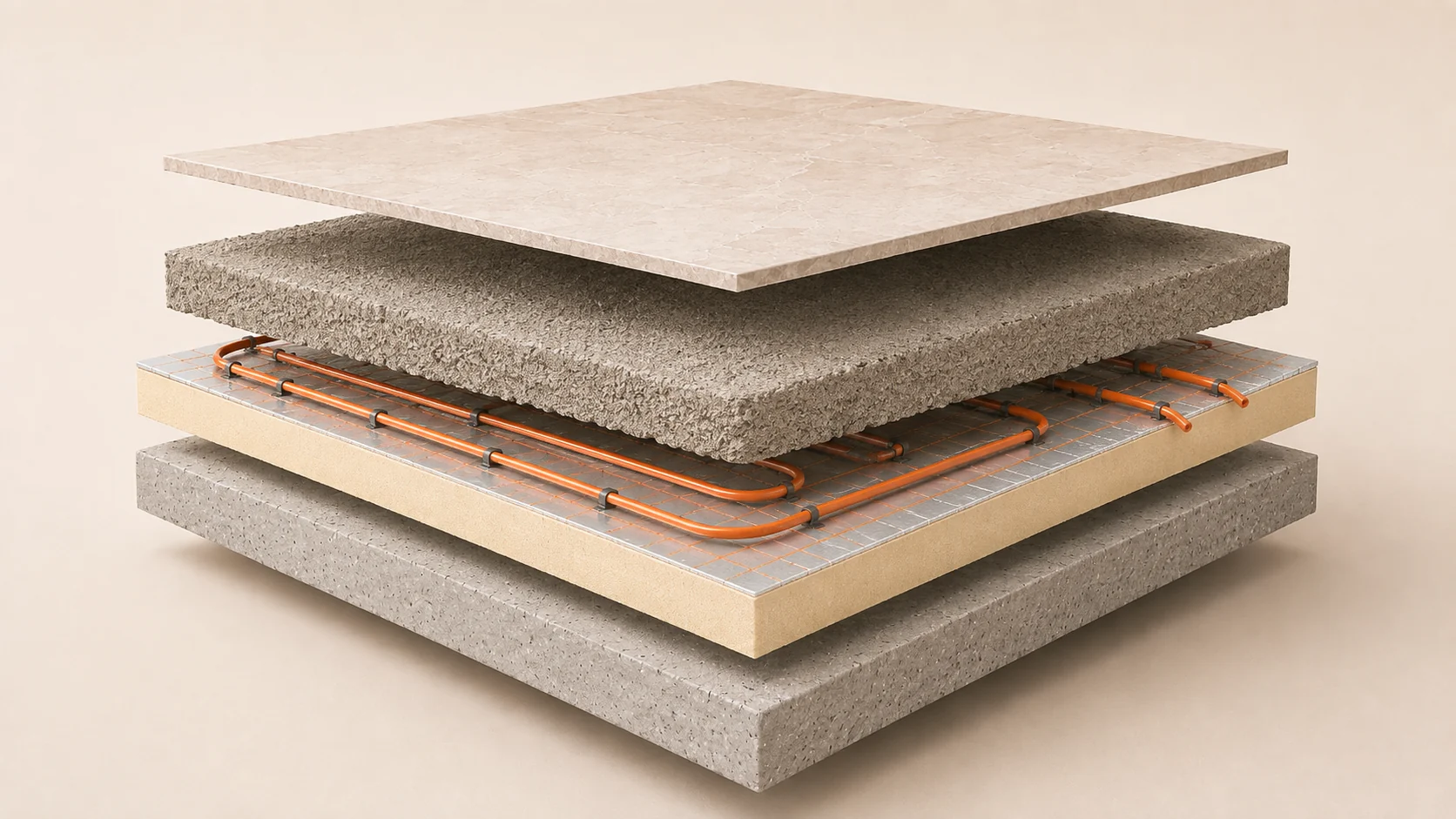
Sand and cement screed with specialist additives, coordinated with underfloor heating at the Highgate East healthcare development.
View project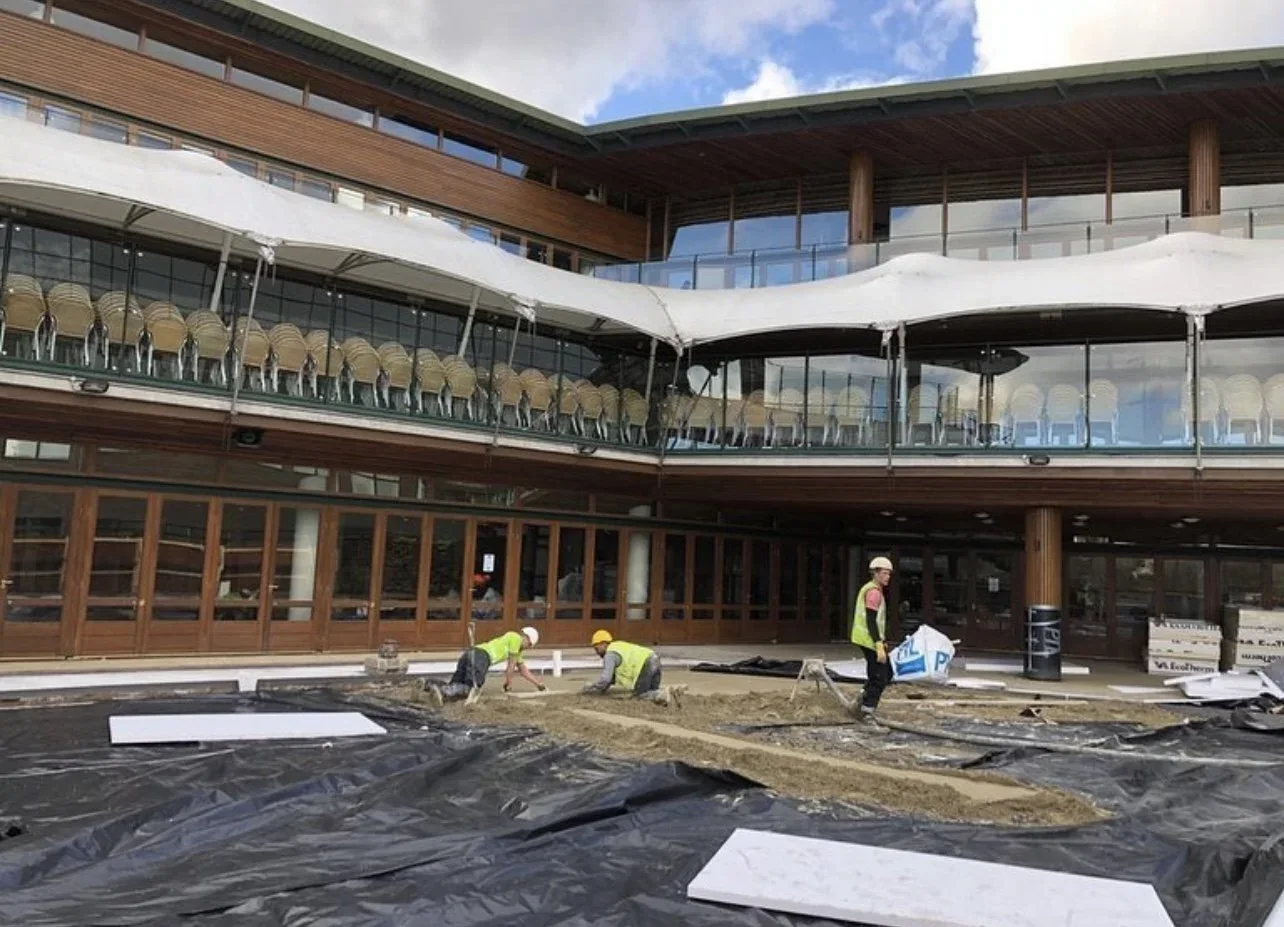
Patio screeding formed with falls towards the drainage points in Wimbledon.
View projectSand and cement screed remains a practical option for many British floor constructions when it is specified correctly against the project build-up.
Commercial new builds, developer housing, refurbishments and one-off residential projects with a known floor build-up.
Projects with a suitable substrate where traditional drying times work with the programme.
Very thin overlays, particularly tight programmes or specialist environments may call for an alternative screed system.
The same material, laid three different ways depending on the substrate, the build-up and what sits beneath the screed.
Screed bonded directly to a sound substrate with a primer or slurry. Thinner depths possible where the slab is suitable.
Typically considered whenTypically considered when the substrate is sound, level enough to bond to and depth is limited.
Depth, mix design, curing regime and follow-on trades are confirmed against the specification and floor build-up. Final depths depend on the substrate, insulation, pipework and the finish above. Provisional figures are not universal rules and are not a substitute for project-specific advice.
Floating screeds are installed over insulation or acoustic layers and are common in modern floor build-ups. The insulation, perimeter detailing, floor loading and any underfloor heating all affect the final screed specification.
Sand and cement screed can be installed over correctly prepared and pressure-tested underfloor-heating pipework where the floor build-up, depth and programme are suitable.
Where required, underfloor-heating installation can be coordinated through a specialist partner before our screeding team completes the floor.
Floor preparation is delivered as part of a screeding or resin package rather than as a standalone service. The items below are reviewed against the overall installation and the project build-up.
Soundness, levels, datum and any required surface preparation.
Where the build-up calls for a damp-proof membrane or separation layer.
Continuity, thickness and edge detailing where insulation sits below the screed.
Fixings, pressure test and cover where underfloor heating is included.
Pump runs, delivery, parking and how the work fits with follow-on trades.
Curing, drying conditions and what arrives onto the finished floor.
For straightforward work with a known area and depth. Request an indicative estimate for review; project details are checked before a formal quotation is issued.
For phased programmes, drawings, bills of quantities, floor build-ups or detailed specifications. Send the available information for review and a considered quotation.
Sand and cement screed is a traditional cementitious mix laid as a smooth, level layer over a structural slab or insulation. It is used to bring floors to the required level and tolerance ready for the chosen finish, and is specified as bonded, unbonded or floating depending on the build-up.
Bonded screed is laid directly onto a prepared substrate with a primer or slurry. Unbonded screed is laid over a separating membrane that decouples it from the slab. Floating screed sits over insulation or acoustic layers and is common in modern build-ups, including above underfloor heating. The right system depends on the substrate, the project build-up and what sits beneath the screed.
Yes, where the underfloor-heating system is correctly installed, fixed and pressure-tested before the pour, and where the build-up, cover and commissioning sequence are suitable. Where required, underfloor-heating installation can be coordinated through a specialist partner ahead of the screed works.
Drying depends on depth, ambient conditions, ventilation and the finish that follows. Rules of thumb exist, but practical drying times should be discussed against the specific floor build-up and programme rather than treated as universal figures.
Preparation typically considers the substrate condition, any required damp-proof membrane or separation layer, insulation, pipework where underfloor heating is included, access and logistics, and protection of the finished floor. These are reviewed as part of the overall installation package rather than as a standalone service.
Yes, sand and cement screed is widely used on commercial projects, including phased programmes, zoned pours and follow-on trades, where the floor build-up and programme support traditional drying.
For straightforward traditional sand-and-cement work with a known area and depth, use the indicative estimate route to send the details for review. For larger or more complex projects, send drawings, bills of quantities, floor build-ups or specifications through the commercial quotation route.
Review the build-up, access, underfloor heating and floor finish programme for your project.
Indicative estimate for straightforward work, or send the specification, floor build-up or bill of quantities for a commercial quotation.